

What is drone connectivity?
Drone Connectivity, also known as networked or smart drones, are unmanned aerial vehicles (UAVs) equipped with communication capabilities that enable it to interact with other devices, systems, or networks. These drones utilise various wireless communication technologies, such as Wi-Fi, cellular networks (4G/5G), satellite communication, or dedicated radio frequencies, to establish connections and exchange data in real-time.
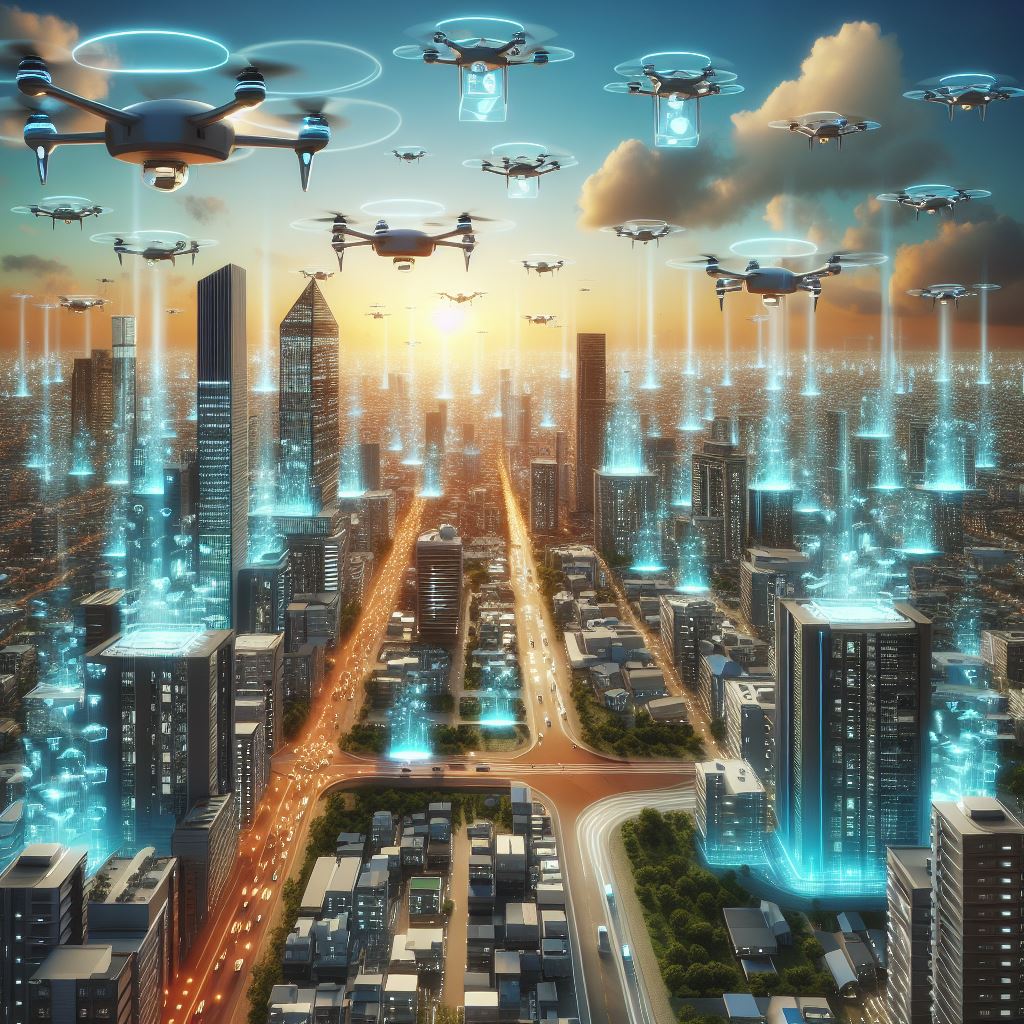
The concept of connected drones encompasses several key features and functionalities:
- Remote Control and Monitoring: Drone connectivity allows operators to remotely control and monitor the aircraft from a centralised location using ground control stations or mobile applications. Operators can track the drone’s location, status, battery levels, and telemetry data, facilitating efficient mission planning and execution.
- Data Transmission: Drone connectivity can transmit data captured by onboard sensors, cameras, and other payload devices in real-time to ground stations or cloud platforms. This data may include high-resolution images, videos, telemetry data, and environmental parameters collected during flight.
- IoT Integration: Connected drones often integrate with Internet of Things (IoT) devices and platforms to exchange data and insights. For example, drones equipped with environmental sensors can collect data on air quality, temperature, and humidity, which can be transmitted to IoT platforms for analysis and integration with other environmental monitoring systems.
- Collaborative Operations: Connected drones facilitate collaborative operations by enabling multiple drones to communicate and coordinate their activities. This capability is particularly useful in scenarios such as search and rescue missions, surveillance operations, or large-scale mapping projects where multiple drones need to work together to achieve common objectives.
- Edge Computing: Some connected drones leverage edge computing capabilities to process data onboard the aircraft or within the drone’s communication network. This approach allows for real-time data analysis, object detection, and decision-making without relying solely on centralized cloud infrastructure, enabling faster response times and reducing reliance on high-bandwidth communication links.
- Security and Privacy: Ensuring the security and privacy of data transmitted by connected drones is crucial. Encryption, authentication, and access control mechanisms are implemented to protect sensitive information and prevent unauthorized access or tampering. Compliance with regulatory requirements, such as data protection laws and aviation regulations, is also essential to safeguard privacy and maintain operational integrity.
Overall, connected drones enable innovative applications and use cases across various industries, including agriculture, infrastructure inspection, public safety, delivery services, and entertainment, by leveraging advanced communication technologies to enhance operational capabilities, efficiency, and safety.
What market sectors are going to use Connected Drones?
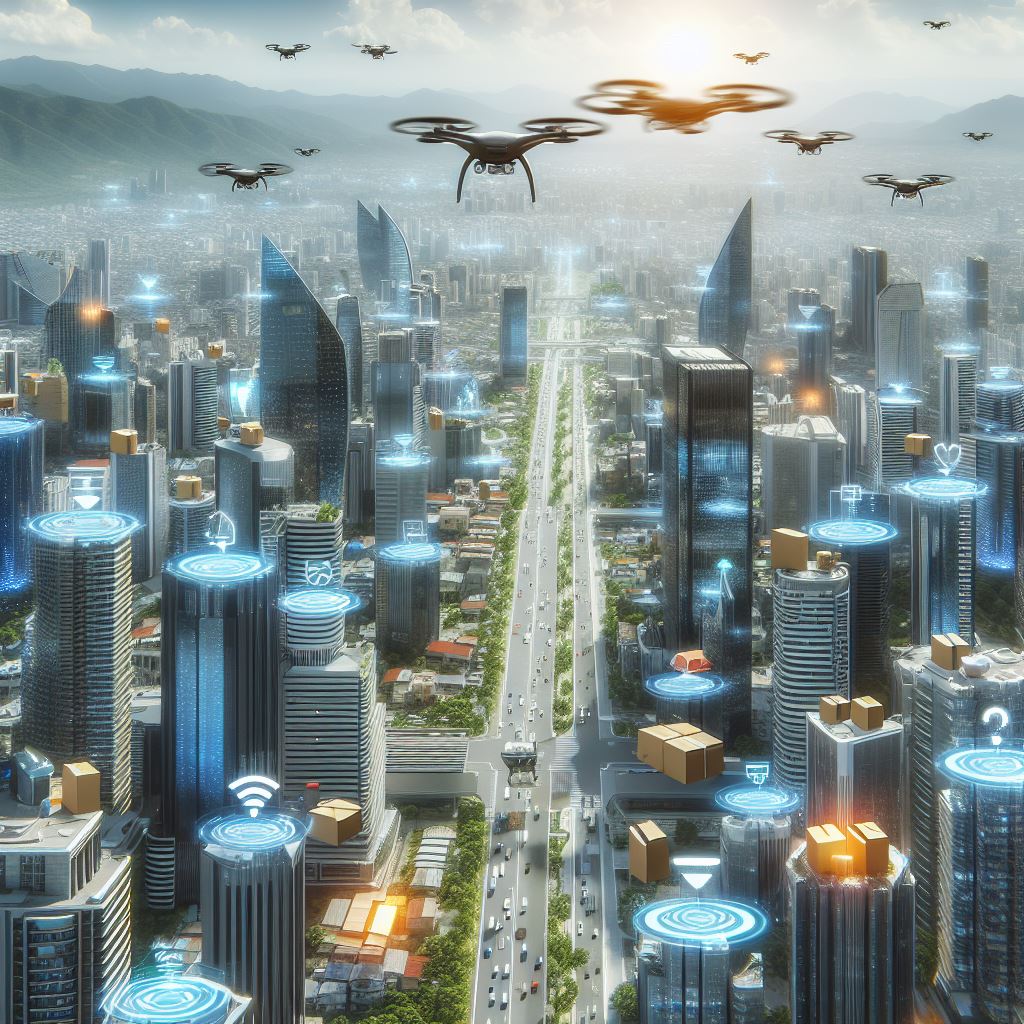
Connected drones have the potential to revolutionise operations across numerous market sectors, offering enhanced capabilities and efficiency in various industries. Here are some key market sectors that are expected to leverage connected drones:
- Agriculture: Connected drones can be used for precision agriculture, enabling farmers to monitor crop health, soil conditions, irrigation needs, and pest infestations more efficiently. By integrating with IoT platforms, drones can provide real-time data insights to optimize farming practices, improve yields, and reduce resource usage.
- Infrastructure Inspection: The infrastructure sector can benefit from connected drones for inspecting bridges, buildings, pipelines, power lines, and other critical assets. Drones equipped with high-resolution cameras, LiDAR, and thermal imaging sensors can capture detailed imagery and data, facilitating proactive maintenance, reducing downtime, and improving safety.
- Construction and Engineering: Drone Connectivity is a valuable tool for construction and engineering projects, enabling site surveying, progress monitoring, and safety inspections. Drones can provide aerial footage, 3D mapping, and volumetric analysis to support project management, logistics planning, and stakeholder communication.
- Public Safety and Emergency Response: In public safety and emergency response scenarios, connected drones play a crucial role in situational awareness, search and rescue missions, firefighting, and disaster management. Drones equipped with thermal imaging cameras, gas sensors, and communication systems can provide real-time data to first responders, enabling faster decision-making and more effective response efforts.
- Environmental Monitoring: Connected drones are used for environmental monitoring and conservation purposes, such as wildlife tracking, forest management, and pollution detection. Drones equipped with specialized sensors can collect data on air and water quality, habitat mapping, and biodiversity assessment, supporting environmental research and conservation efforts.
- Logistics and Transportation: The logistics and transportation sector can leverage connected drones for last-mile delivery, inventory management, and warehouse operations. Drones equipped with payload compartments or cargo hooks can autonomously transport goods between distribution centers or directly to customers, reducing delivery times and costs.
- Media and Entertainment: Connected drones are increasingly used in the media and entertainment industry for aerial photography, filmmaking, and live event coverage. Drones equipped with high-resolution cameras and stabilized gimbals can capture stunning aerial footage, enhancing storytelling and production quality in film, television, sports, and advertising.
- Telecommunications and Connectivity: Connected drones can serve as aerial platforms for extending wireless network coverage, providing temporary connectivity in remote or disaster-stricken areas, or supporting emergency communication infrastructure. Drones equipped with cellular or satellite communication systems can act as flying base stations or relays, expanding network reach and capacity.
These are just a few examples of the diverse market sectors that are poised to benefit from the adoption of connected drones. As technology continues to advance and regulatory frameworks evolve, the potential applications and opportunities for connected drones are expected to expand further, driving innovation and transformation across various industries.