

Smart Mobility Solutions: Transforming Transport for a Better World
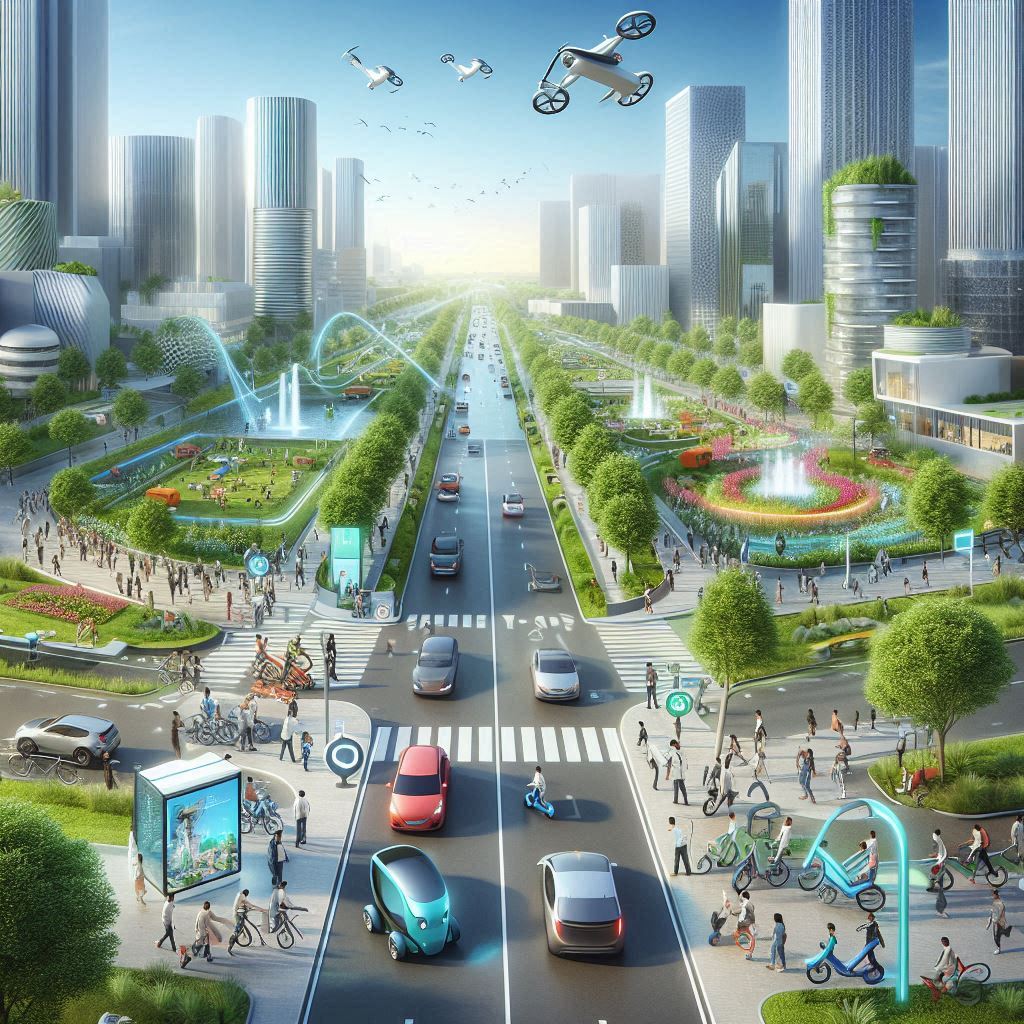
Smart mobility Solutions are redefining how we travel, work, and live in cities. By integrating digital technologies, data, and new business models, smart mobility solutions deliver sustainable, efficient, and inclusive transportation—helping to tackle some of the most urgent global challenges: climate change, congestion, inequality, and road safety.
In this article, we explore how smart mobility benefits the world, the solutions driving the change, and concrete examples of companies in Europe and North America making it happen.

What Is Smart Mobility?
At its core, smart mobility refers to the use of advanced digital technologies, connectivity, and data to improve transportation systems. This includes:
- Mobility-as-a-Service (MaaS): platforms that let users combine different transport modes (bus, bike, taxi, scooter) in a single trip.
- Micromobility: small, often electric vehicles like e-scooters, e-bikes, and shared bikes for short trips.
- Autonomous Vehicles (AVs) / Self-driving cars: vehicles capable of sensing their environment and operating without a human driver (or with minimal intervention).
- Smart infrastructure: intelligent traffic lights, charging networks, high-precision maps, and real-time routing.
- Data-driven planning: using mobility data (from apps, sensors, GPS) to redesign city transport, reduce congestion, and optimise public transport.
These interlinked solutions have powerful positive impacts on the environment, the economy, and social equity.
How Smart Mobility Helps the World
1. Reducing Environmental Impact
One of the biggest benefits of smart mobility is its contribution to reducing carbon emissions and pollution:
- Electric shared vehicles (e-scooters, e-bikes, shared EVs) help reduce dependence on fossil-fuelled private cars.
- Optimised transport flows: real-time traffic data enables cities to better manage congestion, reducing idling time and unnecessary emissions.
- Smart charging infrastructure: By coordinating when and where EVs charge, we can also align with renewable energy production, reducing strain on the grid.
This environmental payoff is crucial in the face of climate change, as transport is one of the most significant sources of urban CO₂ emissions.
2. Improving Efficiency and Reducing Congestion
Smart mobility helps cities and individuals save time:
- Ride-pooling and on-demand shuttle services reduce wasted vehicle space by matching passengers travelling in similar directions.
- Adaptive traffic management: traffic lights, sensors, and predictive algorithms adjust to real-time demand.
- Multimodal trip-planning apps let users choose optimal, fastest, or cheapest combinations of transport, reducing reliance on individual car journeys.
By smoothing flows and reducing bottlenecks, smart mobility can make city travel faster and more predictable.
3. Enhancing Accessibility and Inclusivity
Smart mobility lowers the barriers to transport in underserved areas:
- On-demand microtransit or shuttle services can serve neighbourhoods with poor public transport coverage, especially outside major transit hubs or in rural/suburban zones.
- Integrated MaaS platforms offer a single app and payment method for different modes, making transport more user-friendly.
- Autonomous vehicles have the potential to serve elderly people, people with disabilities, and non-drivers by offering door-to-door mobility.
This inclusivity helps bridge mobility divides and ensures more equitable access to urban opportunities.
4. Boosting Safety
Safety is one of the most transformative benefits:
- Connected and autonomous vehicles can reduce human error, which is a major cause of crashes.
- Smart infrastructure (like intelligent crosswalks, real-time hazard alerts) can warn users of danger or intervene.
- Data analytics helps city planners identify accident hotspots and proactively adjust road design.
By leveraging sensors, AI, and connectivity, smart mobility can make roads safer for all users.
5. Economic Efficiency and Cost Savings
Smart mobility isn’t just good for people and the planet — it can be economically powerful:
- Reduced transport costs for users: Shared mobility is often cheaper per trip than owning a car, especially for short urban journeys.
- Operational savings: Logistics companies and public transport operators can optimize routes, reduce fuel and maintenance costs, and schedule maintenance using predictive data.
- New business models: MaaS, micromobility, and autonomous mobility open up new markets and revenue streams for innovators.
Public authorities also benefit: better-designed transport infrastructure reduces waste, supports sustainable urban growth, and helps deliver better services for less money.

6. Improving Urban Planning and Quality of Life
Smart mobility isn’t just about vehicles — it helps shape the urban environment itself:
- Data-driven insights: city governments can use mobility data to redesign roads, allocate space for bikes, scooters, or pedestrian zones, or manage curbside pickup.
- Reduced car dependency frees up space formerly used for parking, turning it into green areas, plazas, or mixed-use zones.
- Better public transport integration: MaaS platforms encourage people to use public transit alongside micromobility, making bus and train networks more efficient and attractive.
The result? More liveable, human-centric cities.
7. Supporting Energy Transition
Smart mobility helps integrate transport with the clean energy transition:
- Vehicle-to-grid (V2G) technology means EVs can act as energy storage, feeding energy back to the grid during peak demand.
- Smart charging manages when vehicles charge, smoothing demand on the electricity network and aligning with renewable generation.
- Sustainable fleets: shared mobility companies are increasingly investing in zero-emission vehicles, reducing carbon footprints.
By embedding transport in the energy ecosystem, smart mobility supports a more resilient and sustainable future.
Real-World Examples: Smart Mobility Companies in Europe
To illustrate how these principles play out in practice, let’s look at some leading European companies driving smart mobility.
- TIER Mobility
- Based in Berlin, TIER is one of Europe’s largest micromobility providers. It offers e-scooters, e-bikes, and e-mopeds to reduce car dependency in cities.
- TIER has set ambitious sustainability goals; for instance, the company declared itself climate-neutral in 2020.
- Their vehicles help reduce congestion, and because they’re shared, fewer vehicles are “dead-heading” across the city.
- Voi Technology
- Headquartered in Stockholm, Voi provides shared electric scooters and bikes in more than 100 cities across Europe.
- Voi works closely with local governments to enforce geofencing (restricting scooter speeds in certain zones) and promote safe riding through programs like their “RideSafe Academy.” top10gem.com
- By offering micromobility solutions, Voi helps reduce CO₂ emissions, especially for short urban journeys.
- ioki
- ioki’s platform enables cities and public transport operators to run shared shuttle services more efficiently, optimizing routes based on real-time demand.
- They have also begun working on remotely driven services (teledriving), further extending their innovation footprint.
- Their data-driven approach supports more efficient use of vehicles and infrastructure, reducing waste and improving service in less-dense areas.
- Goggo Network
- A European startup (founded in Madrid, based in Berlin) focused on autonomous mobility networks.
- They are building fleets of autonomous vehicles in European cities and helping governments create licensing frameworks for self-driving vehicles.
- In Spain, they have piloted a self-driving food truck and autonomous delivery robots in collaboration with Glovo, demonstrating how AVs can support urban logistics as well as passenger transport.
- Free Now
- Originally a taxi app (myTaxi), Free Now is now a broad provider in Europe.
- It integrates taxis, e-scooters, e-bikes, car-sharing, and e-mopeds in a single app.
- Free Now’s platform allows users to choose greener transport modes, thus reducing reliance on private cars, and supports public transit integration.
- In 2025, Lyft acquired Free Now, creating cross-border mobility synergies.
- TomTom
- Based in the Netherlands (Amsterdam), TomTom is not just a map company: its real-time traffic data, high-precision maps, and navigation software are critical to many smart mobility systems.
- TomTom’s tools help drivers find efficient routes, optimising traffic flow and reducing congestion, as well as supporting autonomous driving through highly accurate mapping.
- Their EV-focused data also helps drivers locate charging stations, improving the usability of electric vehicles.
- Fastned
- Another Dutch company, Fastned, builds and operates fast-charging stations for EVs across Europe.
- By deploying smart, fast-charging infrastructure, Fastned supports the widespread adoption of electric vehicles, enabling long-distance and urban EV travel with minimal disruption.
Smart Mobility in North America: Leading Companies
On the other side of the Atlantic, North America is also home to smart mobility innovators making big impacts.
- Waymo (Alphabet / Google)
- Probably the most well-known autonomous vehicle company. Waymo’s robotaxi service operates in cities like Phoenix, San Francisco, Los Angeles, Austin, and Atlanta.
- Waymo is scaling fast: they announced expansion into new cities and are using electric Jaguar I-PACE vehicles for their fleet.
- To operate these vehicles efficiently, Waymo partners with fleet management firms, integrates charging infrastructure, and uses its own autonomous driving stack (“Waymo Driver”) to reduce cost per trip. Forbes
- According to recent reports, Waymo plans to expand into more U.S. cities (e.g., Dallas in 2026) and internationally (London).
- By replacing some traditional ride-hailing trips with fully autonomous, electric rides, Waymo helps cut emissions, reduce accidents, and increase transport access.
- Zoox
- Owned by Amazon, Zoox is developing purpose-built robotaxi vehicles — unlike retrofitted cars, their designs are specifically made for autonomous operation.
- In 2025, they launched the first serial production facility for these robotaxis in Hayward, California, aiming to produce thousands of vehicles per year.
- Their business model targets both passenger mobility and potentially other use cases (delivery, shared transit), contributing to the evolution of urban transport without human drivers.
- Aurora Innovation
- Based in Pittsburgh and Mountain View, Aurora builds the “Aurora Driver,” a self-driving system that can be integrated into existing cars and vehicles.
- Rather than focusing solely on ride-hailing, Aurora works on partnerships to integrate autonomous technology into freight, logistics, and passenger vehicles — expanding the smart mobility impact across sectors.
- Avride
- A self-driving startup headquartered in Newburyport, MA, Avride develops both robotaxis and delivery robots. Wikipedia
- It already works with Uber: Avride’s autonomous vehicles are used for rides and for Uber Eats deliveries in certain markets. Wikipedia
- By combining passenger transport and delivery services, Avride exemplifies how smart mobility can optimise city logistics and reduce emissions from delivery traffic.
- ChargePoint
- Not a transport operator, but a critical enabler: ChargePoint is a U.S.-based company building EV charging infrastructure. Wikipedia
- They operate a large network of charging stations in North America (and globally) and provide smart charging solutions that help EV users find and pay for charging while also supporting grid-friendly charging (e.g., by shifting loads). Wikipedia
- This infrastructure is essential to scaling electric mobility: without reliable, accessible charging, smart mobility’s environmental benefits cannot be fully realised.
- Mozee
- Based in Dallas, Texas, Mozee develops autonomous, multi-passenger electric vehicles for first- and last-mile transport in controlled environments (campuses, neighbourhoods). Wikipedia
- Their model helps reduce dependence on private cars for short trips, especially in zones where deploying full-scale AV fleets may be less feasible initially.
- By offering shared, driverless vehicles in local zones, Mozee contributes to equitable access to mobility and reduces local traffic pollution.
Challenges and Risks
While the benefits are compelling, smart mobility also faces significant challenges. Here are a few challenges to consider.
- Regulatory and Legal Barriers
- Autonomous vehicles operate under strict regulatory regimes. Different cities and countries have different rules, delaying deployment.
- Liability in the case of accidents is legally complex: who is responsible when a self-driving car crashes?
- Safety and Public Trust
- Even though autonomous vehicles may reduce human-error crashes, incidents still happen, and building trust is critical.
- Smart mobility systems require robust cybersecurity: connected vehicles and infrastructure can be vulnerable to hacking.
- Infrastructure Investment
- Scaling charging networks (for EVs) or intelligent signals demands heavy upfront investment. Not all cities or companies can afford this.
- Legacy transport systems (roads, public transit) may struggle to integrate seamlessly with new, disruptive mobility players.
- Equity and Inclusion Risks
- There is a risk that smart mobility primarily serves affluent, tech-savvy users, leaving marginalised populations behind.
- Shared mobility and robotaxi services must ensure coverage in low-income and underserved areas, not just dense urban centres.
- Energy Demand and Grid Strain
- Widespread adoption of EVs can put strain on electricity grids if charging is not managed intelligently.
- Without smart charging (or V2G), peak loads could worsen rather than help the energy system.
- Economic Disruption
- Traditional transport jobs (taxi drivers, delivery drivers) may be threatened by autonomous vehicles. This raises social and economic concerns.
- Business models are still evolving: many AV companies are not yet profitable, and scaling safely and economically is hard.
The Future: Where Smart Mobility Is Going
Smart mobility is still evolving, but several trends suggest where it’s heading:
- Scaling MaaS: More integrated mobility platforms will emerge, enabling users to seamlessly plan, pay, and travel across buses, scooters, bikes, cars, and AVs.
- Level-4/5 autonomy: As AV technologies mature, more fully driverless vehicles (without a steering wheel) will come online, further reducing the cost per trip.
- Smart city infrastructure: Cities will increasingly deploy sensors, smart lighting, and real-time monitoring to optimise traffic, parking, and mobility.
- Energy integration: EVs will be more deeply integrated with the grid through V2G, smart charging, and even serving as distributed storage.
- Sustainable shared fleets: Shared electric fleets (micro-mobility, robotaxis) will continue to grow, reducing private car use and emissions.
- Data-driven planning: Mobility data will inform urban planning decisions, optimising public transport, reducing inequality, and improving liveability.
Conclusion
Smart mobility is not just a technological fad — it’s a powerful lever for systemic change. By combining electrification, data, connectivity, and automation, smart mobility solutions can:
- Dramatically reduce emissions
- Make cities more efficient
- Improve accessibility for marginalised communities
- Boost safety
- support economic sustainability, and
- Reshape urban life for the better.
Companies in Europe, such as TIER Mobility, Voi, ioki, Goggo Network, Free Now, TomTom, and Fastned, are leading in micromobility, MaaS, autonomous networks, and charging infrastructure. Meanwhile, in North America, firms like Waymo, Zoox, Aurora, Avride, ChargePoint, and Mozee are pushing the frontier of autonomous vehicles, shared mobility, and smart charging.
Of course, significant challenges remain — regulatory, technical, infrastructural, and social. But the momentum is clear: smart mobility is not just helping the world; it’s reimagining what transportation — and cities — can be.
If managed wisely, smart mobility will be a cornerstone of sustainable, equitable, and efficient urban futures.