

IoT Trends for 2026
The IoT Trends in 2026, the Internet of Things (IoT) has shifted from a focus on “connecting devices” to Operational Intelligence. We are seeing a move away from the “cloud-first” mentality toward a “compute everywhere” model, where intelligence is embedded directly into the physical world.
Here are the key IoT trends for 2026:
1. The Rise of ‘Agentic AIoT’
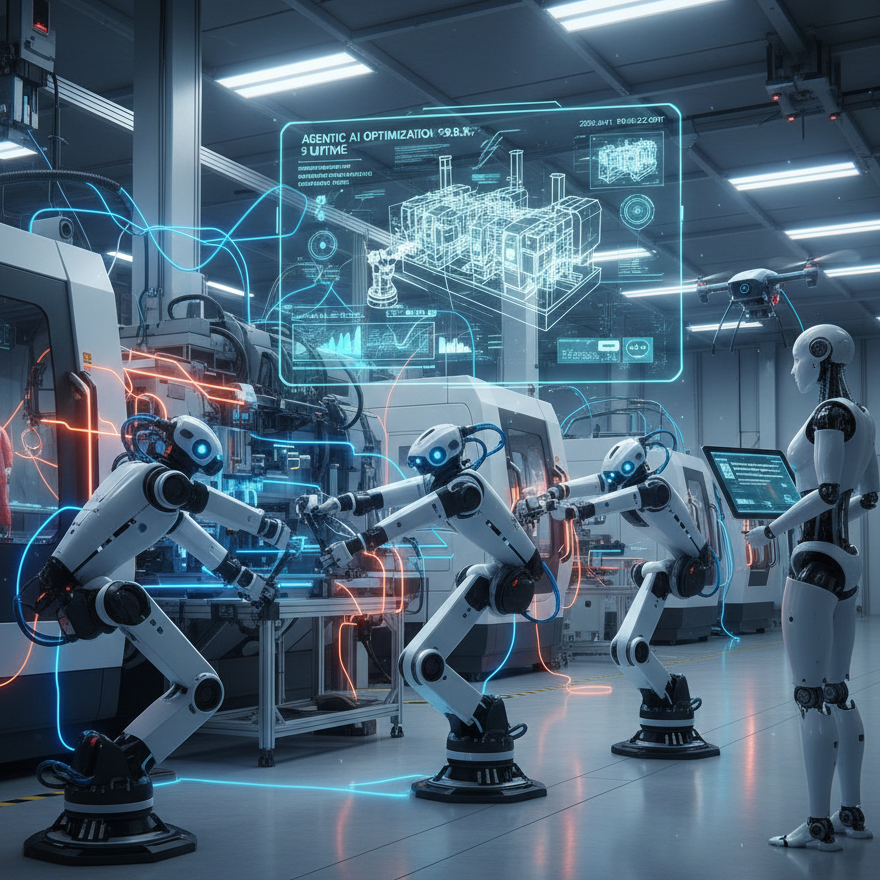
The integration of Artificial Intelligence and IoT (AIoT) has evolved. In 2026, we are moving beyond simple predictive maintenance to Agentic AI—autonomous systems that not only alert a human but also make and execute decisions.
Autonomous Factories: “Lights-out” manufacturing where AI agents coordinate robotic assembly lines, adjusting workflows in real-time based on supply chain delays.
Self-Healing Grids: IoT-connected utility networks that can autonomously reroute power during a failure.
Here is a breakdown of how AIoT has evolved in the last few years and into the future.
The Evolutionary Timeline of AIoT
| Phase | Technology Era | Role of the Device | Primary Logic |
| Past (M2M) | Connectivity (2G/3G) | Data Transceiver | “Tell me what happened.” (Reactive) |
| Recent (IoT) | Cloud Computing (4G/WiFi) | Remote Sensor | “Tell me what is happening.” (Real-time) |
| Current (AIoT) | Edge AI & 5G | Intelligent Agent | “Predict what will happen.” (Predictive) |
| Future (Sentient AIoT) | Agentic AI & 6G | Autonomous Collaborator | “Optimize the outcome for me.” (Autonomous) |
Key Shifts in the Evolution of AIoT.
It’s important to understand the key shifts in the evolution of AloT, so we can understand where it’s going.
i. From Cloud to Edge (Localised Intelligence)
Early AI required massive cloud servers to “crunch” data. Now, thanks to specialised hardware like NPUs (Neural Processing Units), AI models run directly on the device (the “Edge”).
- Impact: This reduces latency from seconds to milliseconds. A self-driving car or an industrial robot cannot wait for a cloud response to avoid a collision; the decision must happen on the device.
ii. From Rule-Based to Generative & Agentic
Previously, IoT devices followed “If-This-Then-That” rules (e.g., if temperature > 30°C, turn on fan).
- The Change: Modern AIoT uses Large Language Models (LLMs) and Multimodal AI. You can now ask a security system, “Find the person in the red jacket who left the box near the exit,” and the AIoT agent understands the context, searches the video feed, and takes action autonomously.
iii. Digital Twins and Simulation
We have moved beyond monitoring single machines to creating Digital Twins—virtual replicas of entire factories or cities.
- The Evolution: AI now runs millions of “what-if” simulations on the Digital Twin using real-time IoT data. It can predict machine failures weeks in advance or optimise city traffic flow before a jam occurs.
Real-World Industry Sectors that Impact IoT Trends for 2026
- Manufacturing: “Lights-out” factories where AIoT systems manage the entire floor, performing their own maintenance without human intervention.
- Healthcare: Wearables no longer just track steps; they use AI to detect early signs of cardiac events or glucose spikes and automatically alert doctors.
- Sustainability: Smart grids use AIoT to balance renewable energy loads in real time, significantly reducing carbon footprints by matching supply with local demand.
2. Edge Intelligence & “On-Chip” AI

The cloud is no longer the primary brain for IoT. In 2026, specialised Edge AI chips (such as RISC-V-based processors and AI accelerators) will be embedded directly in sensors.
Half a decade ago, AI was synonymous with massive models tethered to distant data centres. Today, that paradigm has shifted: intelligence has migrated directly onto the hardware—powering everything from smartphones and drones to medical wearables and industrial sensors.
This transition isn’t just a surface-level upgrade; it presents a fundamental engineering challenge: how do you equip a tiny, thermally constrained chip with the power to perceive and decide in real time? As Qualcomm’s leadership suggests, the industry is currently in the “catbird seat” of this edge AI revolution, where the new frontier isn’t just about raw intelligence, but about achieving high-performance, power-efficient AI directly on the device.
- Local Inference: Over 55% of data analytics now happens at the point of capture.
- Privacy by Design: Because data is processed locally, sensitive information (like video feeds or medical data) never needs to leave the device, significantly reducing security risks.
3. Sustainable & Batteryless IoT
As fleets grow to billions of devices, “battery anxiety” and environmental impact have become major hurdles. 2026 marks the breakthrough of Green IoT.
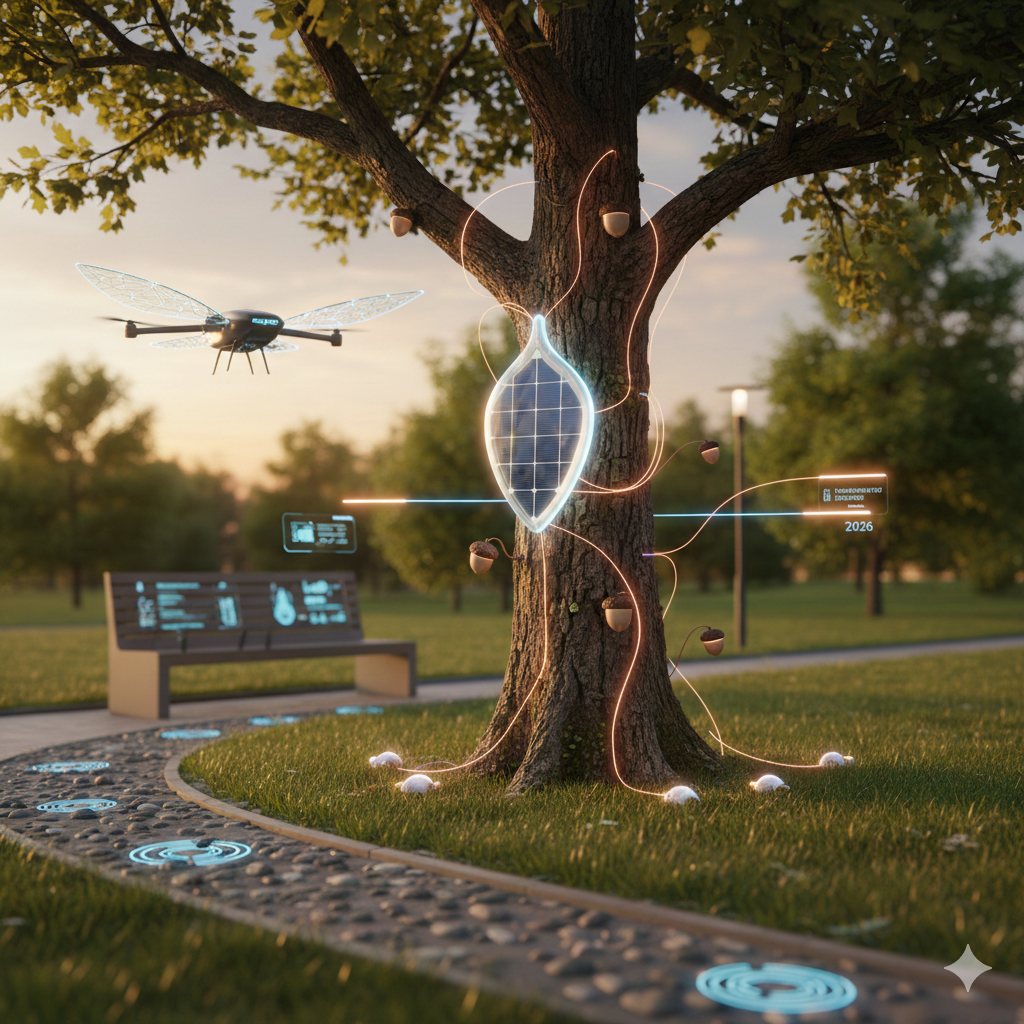
The evolution of Sustainable & Batteryless IoT (often called Ambient IoT) has shifted from a laboratory curiosity to a cornerstone of the 2026 industrial strategy.
For years, the “Internet of Things” was limited by the “Battery Problem”—the logistical nightmare of replacing millions of batteries every two years. Today, the field has evolved into a maintenance-free ecosystem in which devices harvest energy from their surroundings to operate indefinitely.
The Three Pillars of Modern Batteryless IoT
Multi-Source Energy Harvesting
Instead of relying on a single source, 2026 devices are hybrid harvesters. They pull energy from whatever is available in their immediate environment:
- Photovoltaic (Light): New thin-film indoor solar cells can now harvest enough energy from dim office LED lighting to power a sensor.
- Kinetic (Motion): Industrial sensors use machine vibrations to power their data transmissions.
- RF Harvesting: This is the most recent breakthrough. Devices can now “sip” energy from the ambient radio waves of Wi-Fi routers and cellular towers (700MHz to 6GHz) to keep their circuits alive.
These are the Industry sectors that will be impacted by Low Ultra-Low power and Batteryless IoT.
| Industry | Implementation | Impact |
| Retail | Ambient IoT Tags on every clothing item. | Real-time inventory without manual scanning; tags are recycled/reused. |
| Logistics | Self-powered stickers on shipping crates. | Tracks temperature and location across the globe without ever needing a charge. |
| Smart Cities | Vibration-powered sensors on bridges. | Monitors structural integrity using the energy from the cars driving over them. |
| Agriculture | Soil sensors powered by thermal gradients. | Uses the temperature difference between the soil and air to power moisture reports. |
Why This Matters Now
Sustainability isn’t just a “green” goal anymore; it’s a financial one. The European Union’s Battery Regulation and similar global mandates are forcing companies to reduce hazardous waste. By 2026, the “Total Cost of Ownership” (TCO) for batteryless systems will have dropped below that of battery-powered ones because the labour cost of replacing a $2 battery often exceeds $50 in a factory setting.
- Energy Harvesting: Devices are increasingly powered by ambient light, radio-frequency (RF) signals, thermal energy, or motion.
- Carbon-Aware Design: New standards now require “embodied carbon” disclosures for IoT hardware, pushing manufacturers to use recyclable materials and low-power software architectures.
3. The Move to “Intermittent Computing”
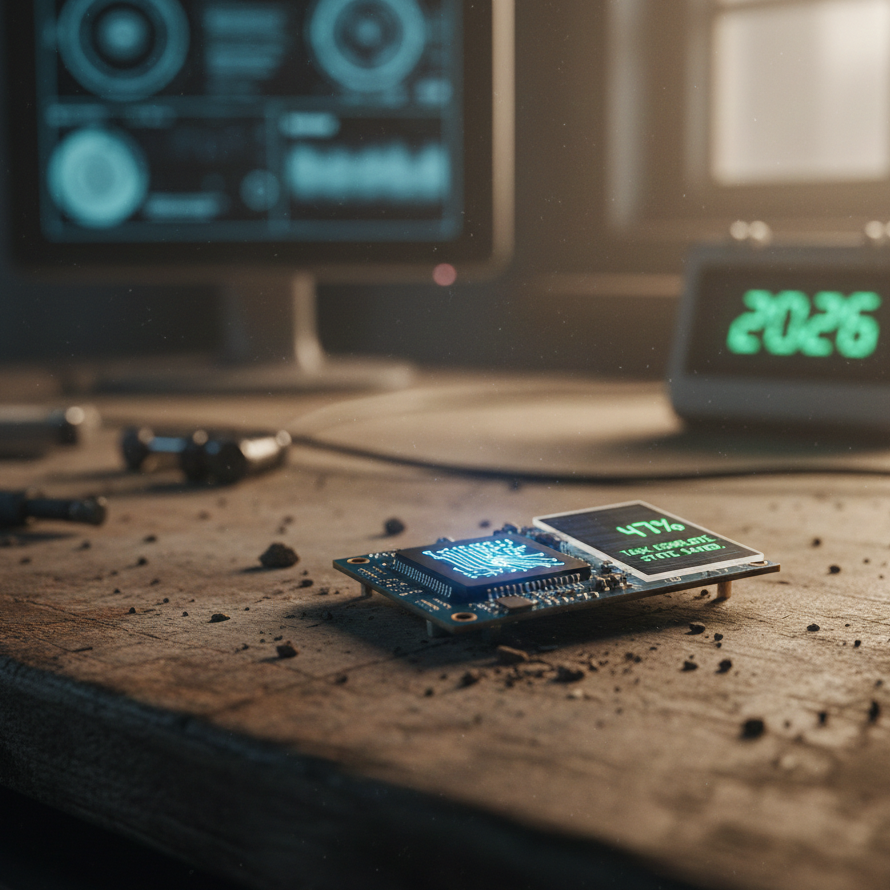
The biggest software evolution is Intermittent Computing. In the past, if an IoT device lost power, it would “die” and lose its place. Today: AIoT devices use Non-Volatile Memory (NVM). They perform a small task, save their state instantly when energy dips, and “wake up” exactly where they left off the moment more energy is harvested. This allows them to function perpetually on “breadcrumbs” of power.
4. Ultra-Low Power (ULP) & 5G RedCap (Reduced Capacity)
Hardware has become 90% more efficient than it was five years ago.
- 5G RedCap (Reduced Capacity): This new cellular standard was designed specifically for these sustainable devices. It allows them to connect to 5G networks using a fraction of the power required by a standard smartphone, making batteryless cellular sensors a reality.
5. Next-Gen Connectivity: 5G RedCap & Satellite IoT
Connectivity is becoming more fragmented but more specialised.
- 5G RedCap (Reduced Capability): This provides the “sweet spot” for mid-tier devices that need more speed than NB-IoT but don’t require the full (and expensive) power of high-end 5G.
- Non-Terrestrial Networks (NTN): Satellite-based IoT is now a standard feature for global asset tracking, ensuring that cargo or agricultural sensors stay connected in the middle of the ocean or remote deserts.
6. Security: From “Bolted-On” to “Structural”
With cybercrime costs soaring, security is no longer an afterthought; it’s critical for Corporate Enterprises to keep their data protected. With the rise of remote working, staff need to access corporate applications.
- Zero-Trust for Machines: In 2026, every “thing” has a non-human identity (NHI). Devices must constantly re-verify their identity to the network.
- Quantum Readiness: Organisations are beginning to pilot quantum-resistant encryption for long-life IoT assets (such as smart meters) that must remain secure for 15+ years.