



Navigating Connectivity for Video Surveillance solutions.
The adoption of cellular-connected CCTV cameras has skyrocketed, with industry experts forecasting nearly 150 million units globally by 2035. This rapid growth is fueled by two major shifts in the Video Surveillance market.
- Video Surveillance Use Cases: Modern Video surveillance extends far beyond traditional security. Today, it plays a vital role in disaster monitoring, crowd management, public safety, and transportation oversight.
- The AI Revolution: Traditional human-operated control rooms are giving way to AI-powered video analytics. Autonomous monitoring slashes operational costs, reduces human error, and minimizes false alarms, making large-scale deployments viable.

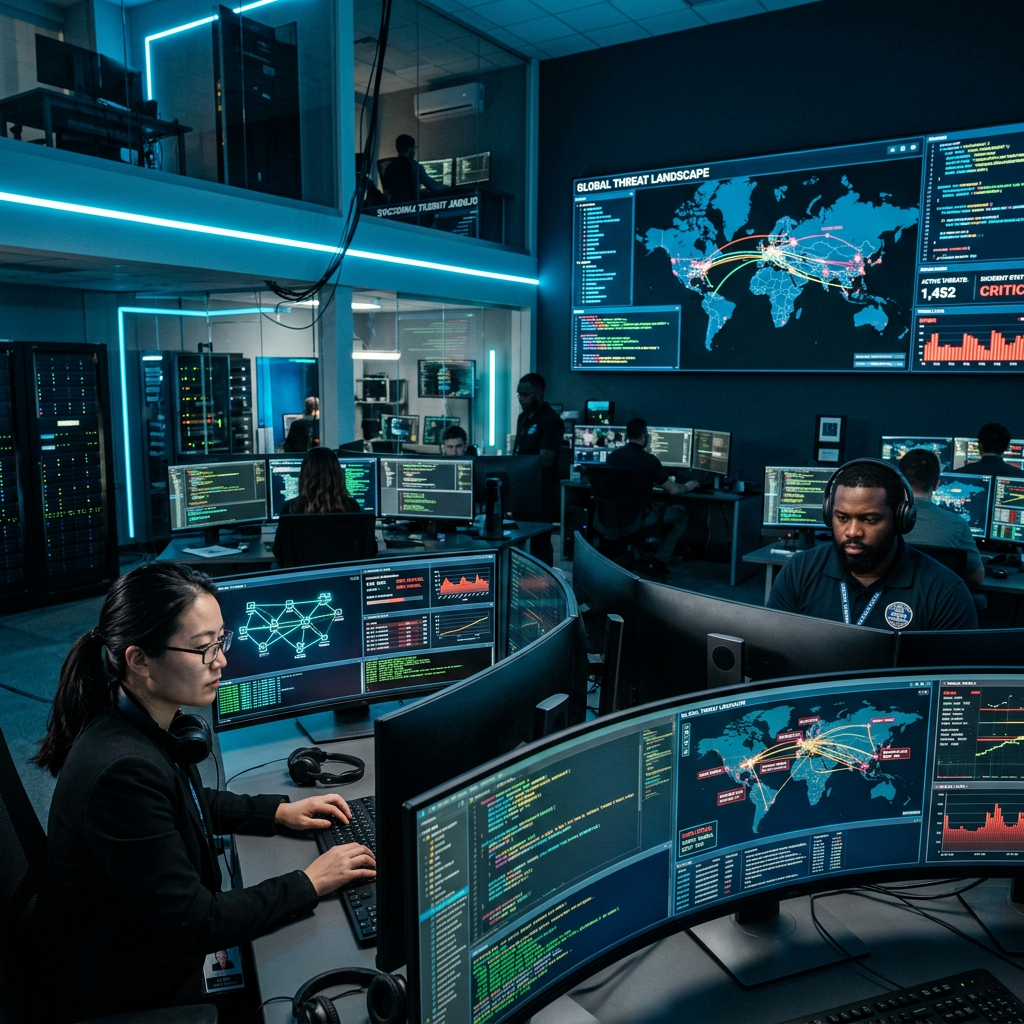
However, continuous transmission and AI-driven analytics require highly demanding network capabilities. To build a resilient system, organizations must optimize four critical connectivity pillars.
1. Latency: The Unpredictable Variable
What it is: The delay between data transmission and its arrival at the destination.
Latency dictates how “real-time” Video Surveillance systems truly are. While capturing, compression, and client-side buffering contribute to delays, the mobile network itself is the most unpredictable variable. Factors like network congestion, physical distance to cell towers, and the underlying technology (4G vs. 5G) cause latency to fluctuate dramatically.
For mission-critical surveillance, predictable latency is non-negotiable. It requires precise network management and strategic bandwidth allocation to ensure that live video feeds and AI alerts trigger without paralyzing delays.
2. Bandwidth: Meeting High-Data Demands
What it is: The maximum capacity of a network to transmit data over a given period.
As camera capabilities evolve, so do data demands. A modern 1080p IP camera generates roughly six times more pixels than a legacy analog camera. Multiply this by dozens of cameras—while factoring in the heavy metadata streams required by AI analytics—and bandwidth consumption explodes.
A major bottleneck for cellular surveillance is uplink capacity, as public mobile networks prioritize downloads over uploads. While some operators artificially throttle video quality or restrict recording times to conserve bandwidth, doing so introduces severe blind spots and risks missing critical incidents.
3. Uptime: Mitigating the Costs of Downtime
What it is: The percentage of time a system remains fully operational and accessible.
In high-stakes environments like public safety, transportation, and industrial logistics, even minor downtime can lead to catastrophic compliance failures or missed threats.
| Uptime % | Allowed Downtime Per Month | Risk Profile |
| 99.9% | ~43 minutes | Standard commercial use |
| 99.99% | ~4 minutes | High-security & Public safety |
| 99.9999% | ~2.5 seconds | Private 5G industrial operations |
The rollout of 5G has revolutionized uptime, accommodating massive device densities and seamless radio handoffs. For instance, Bosch reported that private 5G deployments can achieve 99.9999% reliability within smart factories.
4. Redundancy: Eliminating Single Points of Failure
What it is: The duplication of critical components to ensure continuous operation during a failure.
Hardware breaks, power cuts happen, and networks drop. Building a resilient architecture requires multi-layered redundancy:
- Network Redundancy: Utilizing dual-SIMs, network bonding, or multi-carrier access to instantly reroute data if a primary carrier fails.
- Edge Storage: Equipping cameras with local SD cards or internal hard drives to cache video during a temporary network drop (though systems may take 4–5 seconds to detect a failure and switch over).
- Health Monitoring: Utilizing management platforms that track real-time system telemetry and automatically hot-swap digital recording systems when failure indicators are detected.

Key Requirements for Enterprise-Grade Cellular Infrastructure
To satisfy these four pillars, modern cellular deployment strategies must move away from rigid, single-carrier models and embrace next-generation IoT connectivity frameworks:
Multi-Carrier Access
Video Surveillance networks require access to expansive, multi-network ecosystems. By eliminating reliance on a single operator, cellular surveillance devices can seamlessly switch between different networks, effectively eradicating coverage blind spots even in highly remote locations.
Decentralized eSIM Failover
Advanced eSIM solutions provide autonomous, device-side failover. If a primary mobile network profile loses connection, the eSIM automatically drops back to an alternative carrier profile locally, removing the need to communicate with a remote server to regain a connection.
High-Performance Core Networks
Enterprise connectivity should rely on robust, distributed core network infrastructures that feature localized breakouts near the deployment site. This architecture ensures maximum bandwidth and ultra-low latency while preventing data throttling at the carrier level.
Flexible, Future-Proof Management
Centralized management platforms allow operators to define automated business rules for their fleet. For instance, devices can automatically switch serving carriers based on location, signal quality, regulatory boundaries, or time-based conditions. This flexibility optimizes the total cost of ownership (TCO) and accelerates time-to-market for large-scale, global surveillance operations.